Dreaming of your next adventure but worried about the cost? You’re not alone. The desire to explore new cultures, see breathtaking landscapes, and create lasting memories often clashes with the reality of a finite budget. The secret to bridging this gap isn’t about deprivation or skipping experiences; it’s about spending smarter. This guide moves beyond generic advice, delivering powerful and actionable budget travel tips that will fundamentally change how you plan and experience your journeys. We provide a clear roadmap to help you make your travel fund go further than you ever thought possible.
This article dives deep into the specific strategies that seasoned globetrotters use to see more of the world for a fraction of the cost. You will learn how to master everything from securing off-season deals and navigating the world of budget airlines to finding unique accommodations that are both affordable and memorable. We will cover how to eat like a local without overspending, use public transportation efficiently, and leverage the power of slow travel to reduce costs and enrich your experience. These principles don’t just apply to international excursions. When thinking about budget travel, remember that saving money isn’t just for grand adventures; it also applies to local activities, as shown by guides on affordable and cheap outings for families.
Whether you’re planning a short weekend getaway or a round-the-world trip, these seven proven methods will empower you to maximize every dollar. Get ready to turn your travel aspirations into an affordable reality.
1. Travel During Off-Peak Seasons
One of the most effective budget travel tips is to strategically time your trip. Traveling during the off-peak or “shoulder” seasons, the periods just before and after the high season, can unlock substantial savings across the board. Airlines, hotels, and tour operators drastically reduce prices during these times to attract customers when demand is naturally lower. This simple shift in timing not only saves money but also offers a more relaxed and authentic travel experience with fewer crowds.
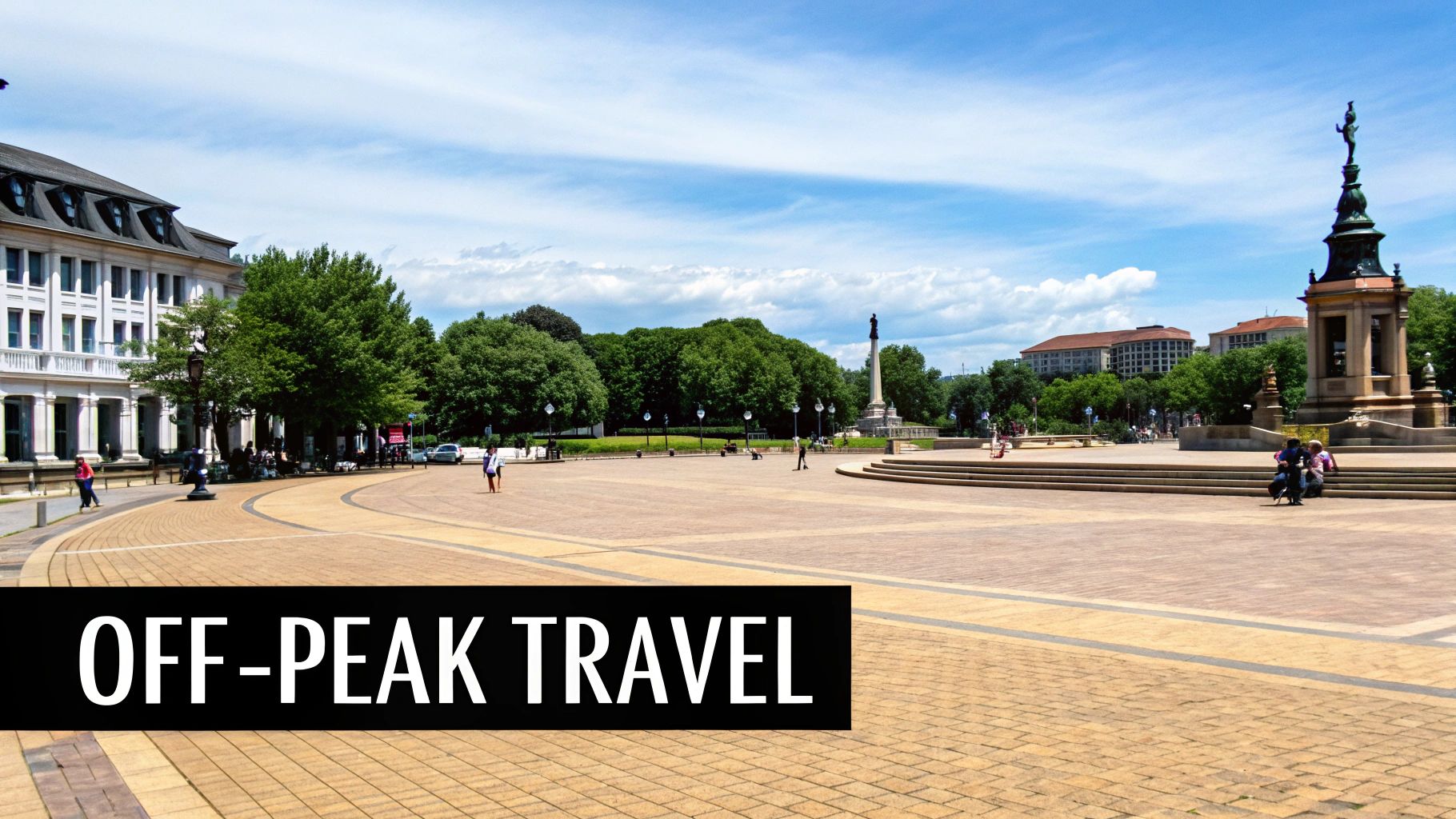
This approach moves beyond just finding a cheap flight; it’s about understanding the rhythm of a destination. For example, instead of visiting Italy in July amidst sweltering heat and massive crowds, consider a trip in October. You’ll enjoy pleasant weather, see the autumn colors, and pay significantly less for your accommodation.
How to Implement This Strategy
Successfully traveling off-peak requires a bit of research, but the payoff is immense. It’s about finding the sweet spot where the weather is still agreeable, attractions are open, and prices are low.
- Shoulder Seasons: These months offer the best of both worlds. For Europe, this means April-May and September-October. For Southeast Asia, consider shoulder months like May or September, which sit between the dry and monsoon seasons.
- True Off-Season: For the most significant discounts, travel during the established off-season. This could mean visiting a ski resort like Whistler in the summer for incredible hiking or exploring the Caribbean during the hurricane season (always with comprehensive travel insurance).
Actionable Tips for Off-Peak Travel
To maximize your savings and experience, keep these specific tips in mind:
- Research Weather and Closures: Before booking, check the typical weather patterns and confirm that major attractions or transport routes won’t be closed. A cheap trip isn’t worth it if everything you want to see is shut down. You can learn more about the best time to visit various destinations at HotelsEscape.com.
- Monitor Flight Prices: Use flight comparison tools like Google Flights or Skyscanner. Their calendar or graph views allow you to visually identify the cheapest months to fly to your chosen destination.
- Check Local Event Calendars: Be aware of local holidays, festivals, or major conferences. These can create unexpected “mini-peak” seasons, causing prices to spike for a week or two even during the off-season.
By embracing the off-season, you’re not just saving money; you’re gaining a more intimate and less stressful travel experience, making it a cornerstone of any smart budget travel plan.
2. Use Budget Airlines and Alternative Airports
One of the most impactful budget travel tips is to rethink how you fly by embracing low-cost carriers and secondary airports. Budget airlines like Spirit, Ryanair, or EasyJet focus on providing a no-frills, point-A-to-point-B service, stripping away extras like checked bags and in-flight meals to offer dramatically lower base fares. Pairing this with flights into smaller, alternative airports, which have lower landing fees and less congestion, can slash your biggest travel expense.

This strategy requires a shift in mindset from an all-inclusive flight experience to an a-la-carte model where you only pay for what you truly need. For example, instead of flying a legacy carrier into Milan’s Malpensa Airport (MXP), you could fly Ryanair into Bergamo (BGY), which is just a short bus ride away and often significantly cheaper. This approach is about being a savvy consumer, understanding the trade-offs, and prioritizing savings over traditional comforts.
How to Implement This Strategy
Successfully using budget airlines and alternative airports is about careful planning and understanding their business model. You must be diligent about the details to ensure your cheap fare doesn’t get inflated by unexpected fees.
- Be Flexible with Airports: When searching for flights on sites like Skyscanner or Kayak, always select the option to include nearby airports. This will reveal if flying into a secondary hub like Newark (EWR) instead of JFK for New York, or London Stansted (STN) instead of Heathrow (LHR), offers substantial savings.
- Embrace the “Unbundled” Fare: Understand that the low price you see is just for your seat. Everything else, from checked luggage to a printed boarding pass, will cost extra. The key is to avoid these fees by planning ahead.

Actionable Tips for Budget Flying
To make this strategy work for you, adopt these specific practices to avoid common pitfalls and maximize your savings.
- Read the Fine Print: This is non-negotiable. Before you click “book,” meticulously read the airline’s terms for baggage allowance (both size and weight), check-in procedures, and cancellation policies. What is standard on a major carrier is often a paid extra on a budget one.
- Pack Light and Smart: The number one way budget airlines make money is through baggage fees. Travel with only a carry-on that fits their specific, often strict, size dimensions. Invest in a travel backpack that maximizes space while meeting requirements.
- Calculate Total Cost: A cheap flight into an airport 60 miles from the city center isn’t a good deal if the train or taxi fare negates the savings. Always research and add the cost of ground transportation from the alternative airport to your final destination before booking.
- BYO Everything: Bring your own snacks, a refillable water bottle, and downloaded entertainment on your phone or tablet. This avoids paying high prices for on-board amenities.
By mastering the art of budget flying, you unlock a powerful tool for affordable travel, making more destinations accessible than ever before.
3. Choose Alternative Accommodations
A huge portion of any travel budget is consumed by accommodation, but one of the most impactful budget travel tips is to look beyond traditional hotels. Exploring alternative accommodations like hostels, guesthouses, and vacation rentals can slash your lodging costs significantly. These options not only provide a place to sleep but often deliver more authentic, local, and social experiences that hotels can’t match. From a dorm bed in a vibrant city-center hostel to a private apartment in a residential neighborhood, the savings are often substantial.
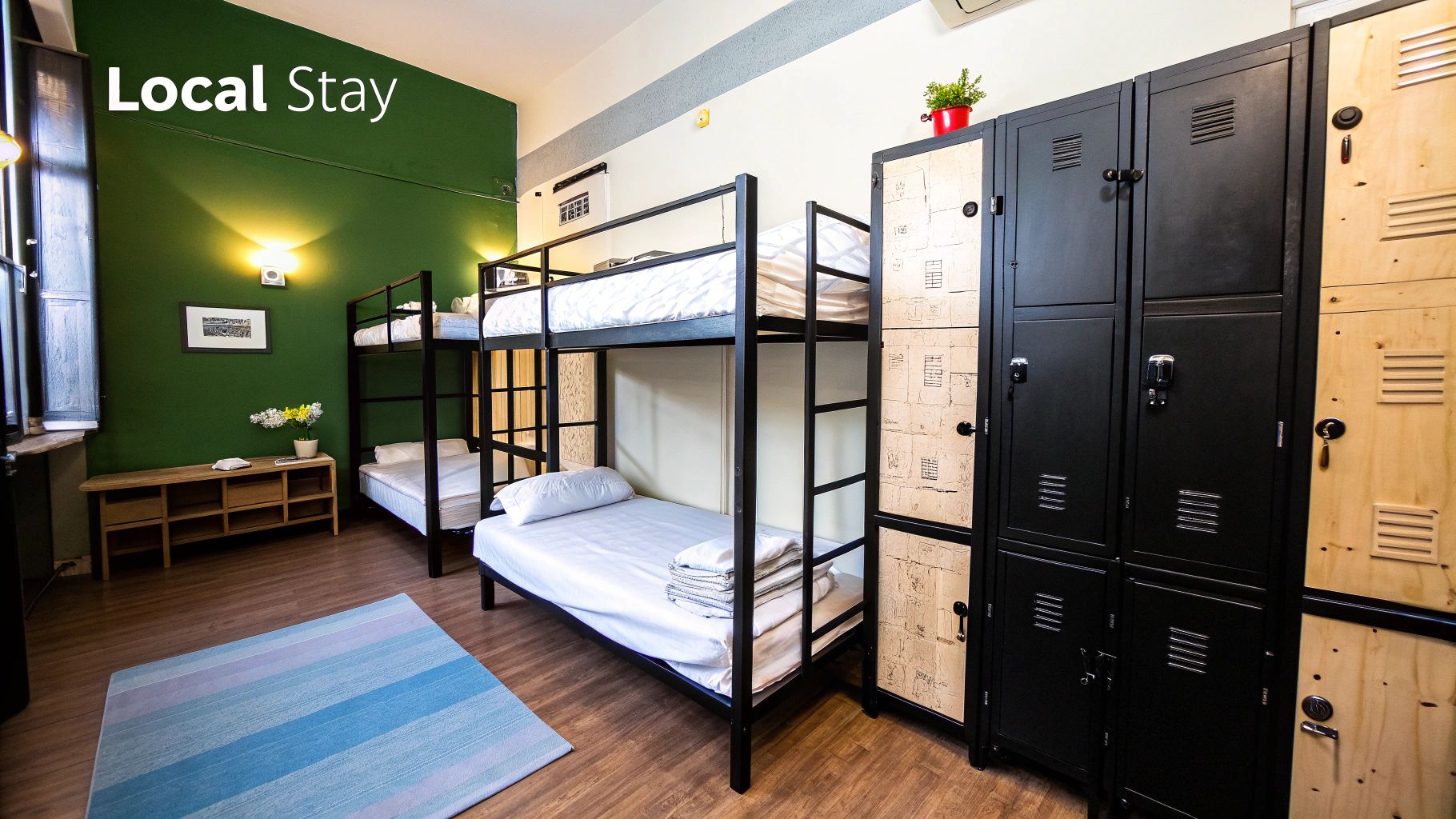
This strategy is about aligning your accommodation with your travel style and budget. For example, a solo traveler might thrive in the social atmosphere of a modern hostel like those from Generator or HI USA, meeting new people and joining group activities. A family or group, on the other hand, could rent an entire apartment via Airbnb or Vrbo for a fraction of the cost of multiple hotel rooms, gaining valuable amenities like a kitchen and living space.
How to Implement This Strategy
Successfully booking alternative lodging involves a different mindset than booking a standard hotel. It requires more research and communication but rewards you with both savings and a richer experience. The key is to know what to look for and which platform best suits your needs.
- Hostels: Ideal for solo travelers and those on a tight budget. Modern hostels offer a range of options from shared dorms to private rooms with en-suite bathrooms, plus communal kitchens and social events.
- Vacation Rentals (Airbnb, Vrbo): Perfect for families, groups, or travelers seeking a “home away from home” feel. Having a kitchen allows you to save even more money by preparing some of your own meals. For a truly budget-friendly stay that also allows you to control food costs, explore useful self-catering cabin tips.
- Guesthouses and B&Bs: These offer a cozier, more intimate experience, often run by local families. They provide great value and a direct connection to the local culture, especially in smaller towns or rural areas.
- Couchsurfing: For the ultimate budget traveler, Couchsurfing connects you with hosts offering a free place to stay. This is less about free lodging and more about cultural exchange and making local connections.
Actionable Tips for Alternative Stays
To ensure your alternative accommodation choice is a success, keep these specific tips in mind:
- Read Reviews Religiously: Pay close attention to recent reviews (within the last few months). Look for comments on cleanliness, safety, accuracy of the listing description, and the host’s responsiveness.
- Verify the Exact Location: Use Google Maps and Street View to check the property’s actual location. Ensure it has convenient access to public transportation or is within walking distance of the areas you plan to visit. A cheap rental far from everything can cost you more in time and transport fares.
- Communicate Clearly with Your Host: Before and after booking, communicate your arrival times and any questions you have. Clear communication sets the stage for a smooth check-in and a positive experience.
- Factor in All Costs: Be aware of extra charges like cleaning fees, service fees, or city taxes, which are common on platforms like Airbnb. Calculate the total cost, not just the nightly rate, to accurately compare it with other options.
4. Eat Like a Local
One of the most authentic and cost-effective budget travel tips is to sidestep tourist-trap restaurants and embrace the local food scene. Dining where locals eat can slash your food budget by 60-80% while offering a genuine taste of the region’s culture. This means exploring neighborhood eateries, shopping at vibrant local markets, and even cooking your own meals with fresh, regional ingredients.
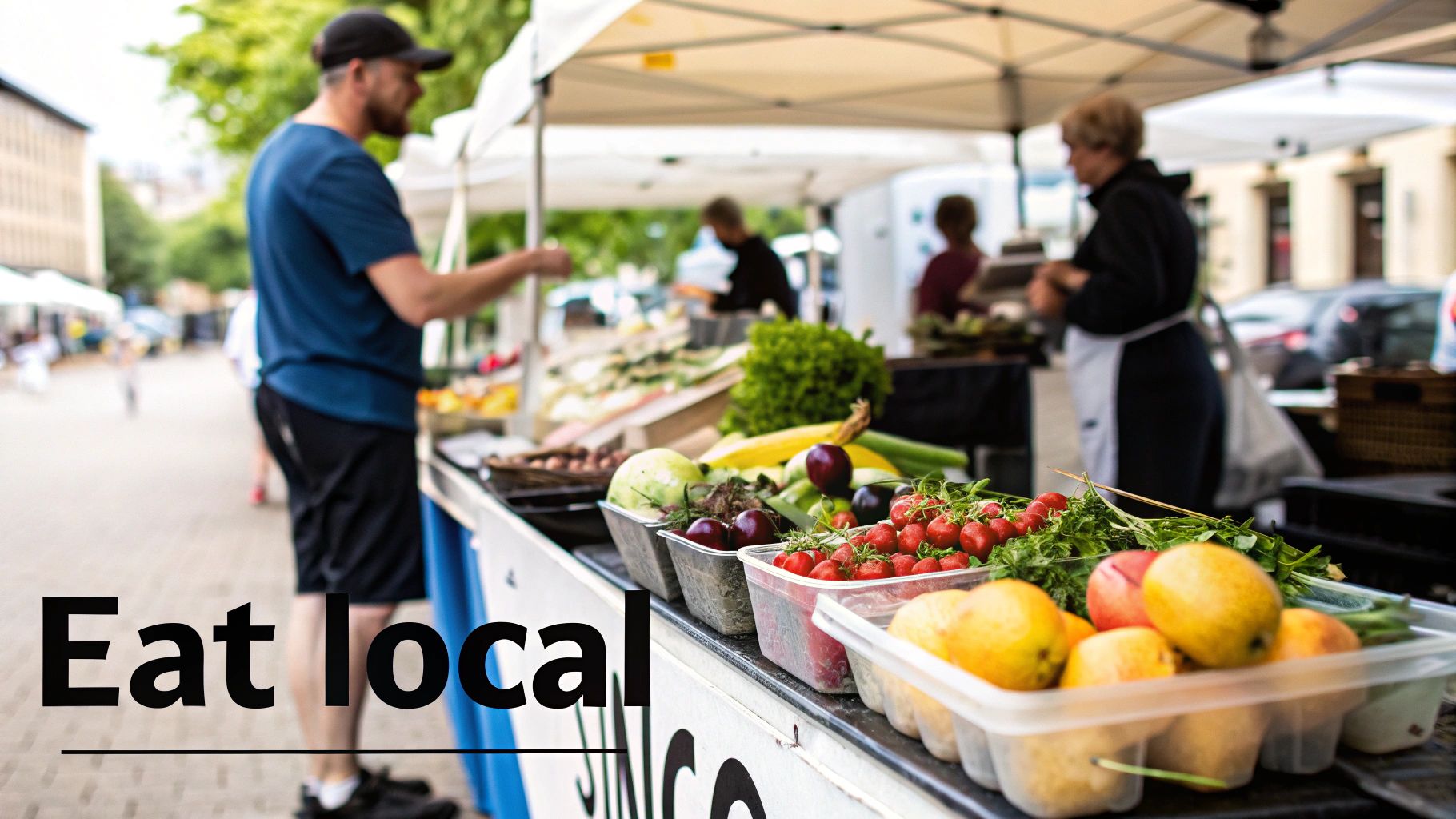
This strategy is about immersing yourself in the destination’s daily life through its food. Instead of paying a premium for a mediocre meal with a view of a landmark, you could be enjoying an unforgettable dish in a bustling local market. Imagine grabbing picnic supplies from a farmer’s market in Provence, trying authentic street food in Vietnam, or cooking fresh pasta in a rented Italian apartment. These experiences are not only cheaper but infinitely more memorable.
How to Implement This Strategy
Eating like a local requires a sense of adventure and a willingness to step off the beaten path. It’s about observation and asking the right questions to uncover the culinary heart of your destination.
- Market Exploration: Make visiting a local food market a top priority. In Europe, this means fresh produce, cheese, and bread for picnics. In Southeast Asia, hawker centers and night markets in places like Singapore or Thailand offer a dizzying array of delicious, inexpensive meals cooked right before your eyes.
- Neighborhood Gems: Wander a few blocks away from the main tourist squares. Look for restaurants with menus in the local language, handwritten specials, and a clientele that clearly isn’t just visiting. These are often family-run establishments serving time-honored recipes.
Actionable Tips for Local Dining
To truly dine like a local and maximize both savings and flavor, keep these specific tips in mind:
- Learn Key Food Phrases: Knowing how to say “hello,” “thank you,” and ask “What do you recommend?” in the local language goes a long way. It shows respect and can lead to fantastic recommendations.
- Ask for Recommendations: Don’t be shy. Ask your hotel receptionist, a shopkeeper, or even someone on the street where they go for their favorite local dish. People are often proud of their food culture and happy to share their secrets.
- Prioritize High-Turnover Vendors: When eating street food, a long line of locals is your best indicator of quality and food safety. A busy stall means the ingredients are fresh and constantly being replenished.
- Utilize Translation Apps: Use apps like Google Translate to read menus. The camera feature can instantly translate printed text, making it easy to decipher daily specials and avoid ordering blindly.
5. Use Public Transportation and Walk
One of the most impactful budget travel tips involves changing how you move around your destination. Opting for local public transportation and exploring on foot instead of relying on taxis, ride-sharing services, or rental cars can save you a significant amount of money. This approach doesn’t just cut costs; it immerses you in the daily life of the city, offering a more authentic and engaging travel experience.
This strategy is about embracing a destination at its own pace. Most major cities, from Tokyo to London, have incredibly efficient bus, train, or metro systems designed for the local population. By using them, you’re not just getting from point A to B; you’re seeing the city through the eyes of its residents, discovering hidden neighborhoods, and experiencing the true urban rhythm.
How to Implement This Strategy
Successfully navigating a foreign city’s transit system requires a little preparation but quickly becomes second nature. It’s about trading the convenience of a private car for the adventure and cost-effectiveness of public options. Walking, in particular, allows for spontaneous discoveries that are impossible when zipping by in a vehicle.
- Urban Exploration: In densely packed cities like Paris or Rome, the metro system is often the fastest and cheapest way to cover longer distances. Combine this with walking to explore the historic centers, where many key attractions are clustered together and best seen on foot.
- Regional Travel: In regions like Southeast Asia, local buses and trains connect towns and cities for a fraction of the price of a private transfer. This method is a core part of the backpacking and sustainable travel culture.
- Active Transport: Cities like Amsterdam and Copenhagen are famous for their bike-friendly infrastructure. Utilizing bike-sharing programs offers a fun, healthy, and economical way to see the sights.
Actionable Tips for Local Transit
To make the most of public transport and walking, keep these specific tips in mind:
- Download Offline Maps and Apps: Before you leave, download offline maps on Google Maps or use a dedicated transit app like Citymapper. This ensures you can navigate without needing a constant internet connection.
- Purchase Multi-Day Passes: If you’re staying for several days, research multi-day or tourist transit passes. These often offer unlimited rides on buses, trams, and subways for a flat fee, providing excellent value.
- Keep Small Change Ready: In many places, ticket machines or on-board payments may not accept large bills or have limited card functionality. Always keep some small change and bills handy for quick ticket purchases.
- Learn Basic Directional Phrases: Knowing how to ask “Where is the bus stop?” or understanding signs for “entrance” and “exit” in the local language can be incredibly helpful and appreciated by locals.
- Avoid Rush Hour: If your schedule is flexible, try to travel outside of peak commuter times (typically 7-9 AM and 4-6 PM). Public transport will be far less crowded and more comfortable.
6. Travel Slowly and Stay Longer
One of the most profound yet practical budget travel tips is to reject the whirlwind tour mentality and embrace slow travel. This approach involves staying in one location for a longer period, such as weeks or even a month, rather than jumping between cities every few days. By reducing your pace, you drastically cut down on transportation costs, which are often a major budget drain, while unlocking deeper cultural immersion and better accommodation rates.
Slow travel shifts the focus from a frantic checklist of sights to the quality of your experience. Imagine spending a month in a single city like Lisbon instead of rushing through five European capitals. You get to know the local rhythms, discover hidden gems, shop at neighborhood markets, and form genuine connections. This deeper engagement often leads to more meaningful and memorable travel.
How to Implement This Strategy
Successfully adopting a slow travel mindset requires a shift in planning. Instead of booking multiple flights and train tickets, your main task is to find a comfortable home base and research the surrounding region for day trips. This method is especially popular with digital nomads, sabbatical-takers, and anyone looking to truly understand a place.
- Long-Term Stays: A prime example is renting an apartment in a small town in Andalusia, Spain, for a month. You can explore the entire region at a leisurely pace, returning to a familiar “home” each night.
- Skill-Based Immersion: Another approach is to combine your stay with a goal. This could involve an extended language course or a volunteer project, giving your long-term stay a clear purpose and structure.
Actionable Tips for Slow Travel
To make the most of an extended stay and maximize your savings, consider these specific tips:
- Seek Weekly/Monthly Discounts: Many Airbnb hosts, guesthouses, and apartment rental services offer significant discounts (often 20-50%) for weekly or monthly bookings. Always check these rates before booking a shorter stay.
- Research Visa Requirements: Before you commit, thoroughly check the visa rules for your nationality in your chosen destination. Many countries have a 90-day limit for tourists, so plan your itinerary accordingly to avoid overstaying.
- Learn the Local Language: Even basic phrases can transform your experience. Particularly for longer trips to Spanish-speaking regions, focusing on learning Spanish for travel can significantly enhance your experience and cultural understanding, helping you connect with locals and navigate daily life.
- Pack Lighter: Since you’ll likely have access to laundry facilities, you can pack far less. This saves on checked bag fees and makes any occasional travel you do much easier.
By traveling slowly, you not only save substantial money but also invest in a richer, more authentic connection with the destination, making it an essential strategy for any savvy traveler.
7. Use Travel Rewards and Credit Card Points
One of the most powerful budget travel tips involves leveraging a system often called “travel hacking.” By strategically using travel rewards credit cards and loyalty programs, you can earn points on everyday spending that translate into free flights, hotel stays, and valuable upgrades. This isn’t about going into debt; it’s about making your existing expenses work for you to dramatically cut the biggest costs associated with travel.
This method transforms your monthly bills, grocery shopping, and fuel purchases into a travel fund. For instance, a single credit card sign-up bonus, earned after meeting a minimum spending requirement, can often be enough for a round-trip international flight or several nights in a luxury hotel. By mastering this, you can access travel experiences that would otherwise be far outside a typical budget.
How to Implement This Strategy
Success with points and miles is about being organized and strategic. The goal is to maximize the points you earn while minimizing any associated fees or interest charges, ensuring your travel is genuinely discounted or free.
- Choose the Right Card: Start with a card that aligns with your goals. Cards like the Chase Sapphire Preferred offer flexible points that transfer to numerous airline and hotel partners. If you are loyal to one airline, a co-branded card like a United or Delta card might offer better perks like free checked bags.
- Focus on Sign-Up Bonuses: The fastest way to accumulate a large number of points is by earning sign-up bonuses. These typically require you to spend a certain amount (e.g., $4,000 in 3 months) to receive a substantial point bonus (e.g., 60,000 points). Plan your application around a period when you know you have large expenses coming up.
Actionable Tips for Using Travel Rewards
To get the most out of your points and avoid common pitfalls, follow these specific guidelines:
- Pay Balances in Full: This is the golden rule. The high-interest rates on rewards credit cards will quickly negate any value you get from points. Only charge what you can afford to pay off completely each month.
- Understand Transfer Partners: Before redeeming, research the best transfer partners for your chosen card. Transferring Chase Ultimate Rewards points to a partner like Hyatt Hotels often provides a much higher value per point than redeeming them for cash back or through the Chase travel portal. If you’re focusing on hotel stays, you can discover more strategies on how to maximize your hotel rewards at HotelsEscape.com.
- Track Your Points: Keep a simple spreadsheet to track your different point balances, their expiration dates, and any annual fees for your cards. This helps you use points before they expire and decide if a card’s annual fee is worth keeping.
- Don’t Hoard Points: Points and miles almost always devalue over time as loyalty programs change their rules. It’s better to “earn and burn” for trips you want to take rather than saving them indefinitely for a far-off “perfect” redemption.
7 Budget Travel Tips Comparison
| Strategy | Implementation Complexity 🔄 | Resource Requirements ⚡ | Expected Outcomes 📊 | Ideal Use Cases 💡 | Key Advantages ⭐ |
|---|---|---|---|---|---|
| Travel During Off-Peak Seasons | Medium – requires seasonal research | Low – mainly time flexibility | Cost savings 30-70%, fewer crowds | Flexible travel dates, cultural immersion | Significant savings, authentic experiences |
| Use Budget Airlines & Airports | Medium – careful booking needed | Low – budget airlines & alternative airports | Flights 50-80% cheaper, potentially less comfort | Short to medium haul flights, budget travel | Very low fares, fast boarding |
| Choose Alternative Accommodations | Medium – vetting options | Low to medium – varies by accommodation | Savings on lodging and food, local feel | Longer stays, budget-conscious travelers | Cost-effective, kitchen facilities |
| Eat Like a Local | Low – choosing local places | Low – mostly time and language | Food cost reduction 60-80%, authentic cuisine | Food lovers, cultural explorers | Major food savings, authentic tastes |
| Use Public Transportation & Walk | Medium – learning local systems | Very low – minimal expenses | Huge savings on transport, local immersion | Urban travel, eco-conscious travelers | Cost-effective, environmentally friendly |
| Travel Slowly and Stay Longer | High – requires time off/planning | Medium – longer accommodation commitment | Reduced transport costs, deeper experiences | Remote workers, sabbaticals, gap years | Better rates, cultural immersion |
| Use Travel Rewards & Credit Card Points | High – knowledge and credit needed | Low – everyday spending | Free flights/hotels, perks | Frequent spenders, credit-qualified users | Can eliminate major costs, added perks |
Your Adventure Starts Now: Putting Your Budget Skills to the Test
We’ve journeyed through a comprehensive toolkit of powerful, actionable budget travel tips, moving far beyond the generic advice you’ve heard before. The journey from wishful thinking to booking a flight is shorter and more achievable than you might imagine. It all begins with a fundamental shift in perspective: from asking, “Can I afford this trip?” to confidently declaring, “This is how I will make this trip affordable.” The strategies we’ve covered are not just isolated tricks; they are interconnected components of a savvy traveler’s mindset.
Think of it as a masterclass in value-driven exploration. By weaving these techniques together, you create a powerful synergy that stretches every dollar further, unlocking doors to destinations you may have considered out of reach. Your travel budget is no longer a rigid barrier but a flexible resource you can strategically allocate to maximize experience.
From Theory to Takeoff: Your Action Plan
The knowledge you now have is your greatest asset. The key is to move from passive reading to active planning. It can feel overwhelming to implement everything at once, so start with a focused approach. Your goal is to build momentum and prove to yourself that these methods work.
Here’s a simple, actionable plan to get you started:
- Choose One Core Strategy: Pick the single tip from this article that resonates most with you or seems easiest to apply to your next travel idea. Is it the thrill of finding a deal in the off-season? The challenge of mastering credit card points? Or the simple joy of eating authentic, affordable street food? Focus on mastering that one area first.
- Plan a “Micro-Trip”: You don’t need to plan a round-the-world adventure to test these skills. Apply your chosen strategy to a weekend getaway or a short domestic trip. This low-stakes environment is perfect for learning the ropes and building confidence.
- Track Your Savings: This step is crucial. Create a simple spreadsheet or use a notes app to compare the cost of your trip using your new budget strategy versus what it might have cost otherwise. Seeing the tangible savings, whether it’s $50 or $500, provides powerful motivation to continue.
- Layer and Expand: Once you feel comfortable with one strategy, start layering on another. Combine your off-season travel with alternative accommodations like a private room in a hostel. Add savvy public transport use to your local dining strategy. This layering effect is where you’ll see exponential savings.
The True Reward of Smart Travel
Mastering these budget travel tips offers a reward far greater than just a cheaper vacation. It’s about empowerment. It’s the confidence that comes from knowing you have the skills to navigate the world on your own terms, without being limited by a five-star budget.
This approach transforms you from a tourist into a traveler. You’re no longer a passive consumer of pre-packaged experiences. Instead, you are an active participant in your adventure, making deliberate choices that lead to richer, more authentic interactions. You’ll remember the bustling local market where you bought fresh pastries for breakfast far more vividly than another generic hotel buffet. The scenic bus ride through the countryside will stick with you longer than an anonymous taxi ride.
The ultimate goal of budget travel isn’t deprivation; it’s intentionality. It’s about prioritizing what truly matters: the experience, the connection, the memories. By spending less on the logistics, you free up resources, both financial and mental, for the moments that define a journey. It’s the freedom to say “yes” to a spontaneous cooking class, an extra museum visit, or a second week in a city you’ve fallen in love with. Your adventure is waiting, and you now have the keys to unlock it.
Ready to put these tips into action and find the perfect place to stay without breaking the bank? At HotelsEscape, we specialize in uncovering incredible deals on accommodations worldwide, from budget-friendly hostels to boutique hotels. Use our powerful search tools on HotelsEscape to compare prices and find the ideal base for your next affordable adventure.