|
Getting your Trinity Audio player ready...
|
Architectural glass has long been a defining feature of memorable hotels, helping create bright, elegant spaces that leave lasting impressions on guests. While today’s luxury hotels are known for soaring glass façades and panoramic views, the relationship between hospitality and architectural glass stretches back much further. According to Historic Hotels of America, many of America’s most celebrated historic hotels showcase spectacular glass features that have captivated visitors for generations. Landmarks such as The Peabody Memphis feature an ornate stained-glass ceiling above the Grand Lobby, while The Grand America Hotel in Salt Lake City incorporates handcrafted stained-glass domes that add grandeur to its interiors. The Pfister Hotel in Milwaukee is also renowned for its magnificent stained-glass ceiling, demonstrating that decorative architectural glass has long been used to elevate the guest experience. These historic examples illustrate that, whether traditional or contemporary, architectural glass has always played an important role in hospitality design.
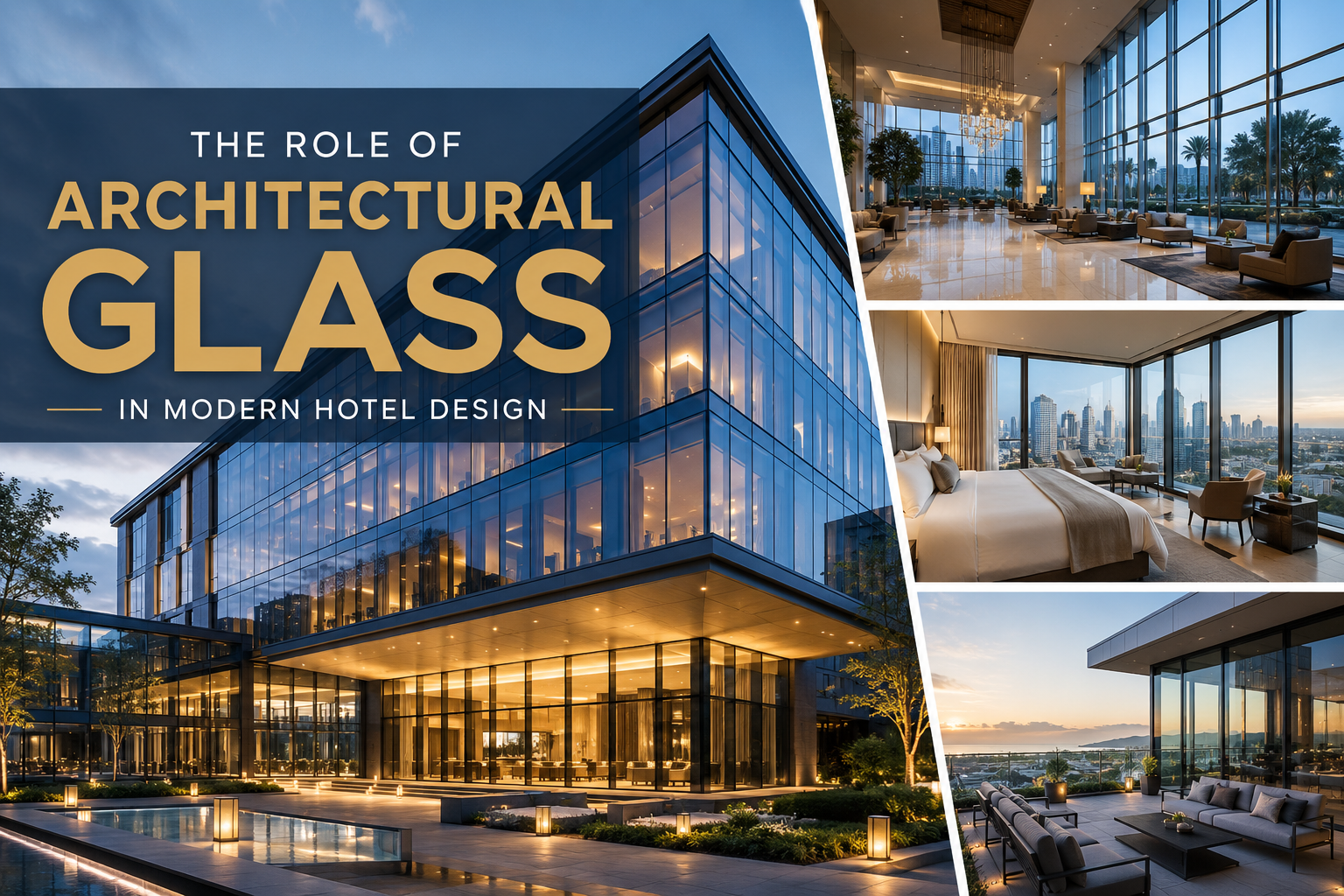
Today, advances in glass technology have expanded those possibilities even further. Hotels now rely on architectural glass not only as a decorative feature but also as a high-performance building material that improves energy efficiency, comfort, and functionality while creating unforgettable spaces for guests.
Why Architects Choose Architectural Glass
Architectural glass is not just a building material. The professionals at Flickinger Glassworks, who design, customize, and install architectural glass, describe it as a transformative element in modern architecture. Its significance lies in its ability to shape not only the aesthetics of a building but also its functionality. Unlike many traditional construction materials, architectural glass allows architects to blur the boundaries between indoor and outdoor spaces while maximizing daylight, showcasing surrounding views, and creating interiors that feel larger and more inviting.
For hotels, this versatility is especially valuable. Large expanses of glass create dramatic entrances, brighten guest rooms, and establish visual connections with beaches, mountains, city skylines, or gardens. Decorative, textured, etched, and curved glass can also reinforce a hotel’s unique brand identity, helping distinguish it from competitors.
Architectural glass offers architects the freedom to design bold, contemporary spaces while meeting practical requirements for durability, safety, and occupant comfort.
Energy-Efficient Glazing Systems for Hotels
Sustainability has become a major priority for the hospitality industry as hotels work to reduce both their environmental impact and operating costs. The study Towards Sustainable Hospitality notes how hotels are among the most energy-intensive building types due to their continuous operation, guest amenities, and extensive heating, cooling, lighting, and ventilation requirements. The study also notes that improving energy efficiency is essential not only for reducing carbon emissions but also for lowering operational expenses, strengthening a hotel’s environmental reputation, and meeting the growing demand from travelers for more sustainable accommodations.
Modern architectural glass helps reduce energy consumption through advanced glazing technologies. Double- and triple-glazed units improve insulation, while low-emissivity (Low-E) coatings reflect unwanted heat without blocking natural daylight. Solar-control glass further reduces heat gain, particularly in warm climates where air conditioning costs can be substantial.
By incorporating high-performance glazing systems, hotels can create bright interiors while lowering operating expenses and improving guest comfort throughout the year.
Impact-Resistant Glass for Coastal Resorts
Hotels located in coastal regions face unique environmental challenges, including hurricanes, tropical storms, and high winds.
Impact-resistant architectural glass provides an effective solution by combining multiple layers of laminated glass that remain intact even when struck by windborne debris. These systems help protect guests, reduce property damage, and maintain the integrity of the building envelope during severe weather.
Many coastal resorts now specify impact-resistant glazing not only to comply with local building codes but also to provide peace of mind for guests visiting during hurricane season.
Acoustic Glass for Quieter Guest Rooms
Comfort extends beyond what guests can see—it also includes what they hear.
Hotels located in busy urban centers, near airports, or adjacent to entertainment districts often rely on acoustic architectural glass to reduce outside noise. Special laminated glazing systems are designed to dampen sound transmission, creating quieter guestrooms and improving sleep quality.
Acoustic glass also benefits meeting rooms, executive lounges, and wellness facilities where peaceful environments enhance the overall guest experience.
Decorative Glass for Branding and Interiors
Architectural glass plays a much larger role in hotel design than simply enclosing a building—it also helps shape the atmosphere and identity of interior spaces. A LinkedIn post on architectural glass details how architects have access to a wide range of architectural glass products, including frosted, etched, back-painted, laminated, tinted, patterned, and decorative glass, each offering unique aesthetic and functional benefits. This versatility allows hotels to create visually distinctive spaces while meeting practical requirements such as privacy, safety, and durability.
Frosted glass partitions create privacy without blocking natural light, making them a popular choice for guest bathrooms, spas, wellness centers, and meeting rooms. Etched glass can be customized with decorative motifs, hotel logos, or wayfinding elements for doors, partitions, and reception areas, while back-painted glass introduces vibrant color and a sleek, contemporary finish to bars, restaurants, elevator lobbies, and feature walls. Patterned and tinted glass can also be incorporated to add texture, visual interest, and a sense of luxury throughout public spaces.
By selecting decorative architectural glass that reflects their brand identity, hotels can create memorable interiors that feel both sophisticated and welcoming while maintaining the clean, modern aesthetic that today’s travelers expect.
Custom Architectural Glass for Unique Hotel Concepts
Every hotel aims to create a memorable experience, and custom architectural glass gives designers the flexibility to achieve distinctive concepts.
Glass can be fabricated in custom sizes, shapes, finishes, and configurations to suit virtually any architectural vision. Curved glass, oversized panels, textured surfaces, colored laminates, and decorative treatments enable hotels to create signature entrances, dramatic atriums, panoramic elevators, skylights, and sculptural façades that become defining elements of the property.
Custom fabrication ensures that glass serves both functional and artistic purposes, allowing architects to balance structural performance with creative design.
Sustainability and Daylight Optimization
Sustainability has become an increasingly important consideration for hotel developers and operators.
Architectural glass contributes to greener buildings by maximizing natural daylight, reducing reliance on artificial lighting during daytime hours, and supporting energy-efficient building envelopes. Well-designed glazing systems can also improve occupant comfort by reducing glare while maintaining consistent indoor temperatures.
Many hotels pursuing green building certifications incorporate advanced glazing technologies as part of broader sustainability strategies that include efficient HVAC systems, renewable energy, and water conservation initiatives.
Hotels Showcasing Innovative Glass Design
Some of the world’s most recognizable hotels demonstrate just how versatile architectural glass has become.
The Burj Al Arab in Dubai uses expansive glazing to complement its sail-inspired silhouette while offering sweeping views of the Arabian Gulf. In Singapore, Marina Bay Sands features extensive glass façades that flood guestrooms with daylight and frame panoramic views of Marina Bay. Meanwhile, The Opus by Omniyat in Dubai showcases dramatic custom glazing that wraps around its sculptural form, transforming the building into an architectural landmark.
These projects illustrate how architectural glass can become an integral part of a hotel’s identity while enhancing both performance and guest satisfaction.
Shaping the Future of Hospitality Design
Architectural glass has evolved from decorative stained-glass ceilings in historic hotels to sophisticated high-performance glazing systems that define many of today’s most iconic hospitality projects. Its ability to combine beauty, durability, energy efficiency, and customization makes it one of the most valuable materials available to architects and designers.
As hotels continue competing through memorable guest experiences and distinctive architecture, architectural glass will remain central to their success. Whether creating brighter interiors, improving sustainability, reducing noise, or delivering breathtaking views, it demonstrates that exceptional hospitality begins with exceptional design.
For more on the latest hotel trends, do go through the rest of HotelsEscape.